
When an appraiser walks onto a Florida Keys property, the value is rarely decided by the house alone. It is decided by the things mainland buyers never think about: how deep the canal stays at low tide, whether the seawall is sound, if the dock can hold a boat lift, and how far the lowest floor sits above the flood elevation. Those features can swing an appraised value by tens of thousands of dollars in either direction, and they are the first things a Keys appraiser checks. This guide walks through what appraisers actually look for in a Keys home, the documents that make the report go smoothly, and the UAD 3.6 appraisal changes taking effect November 2, 2026.
This is the preparation side of the appraisal story. My complete guide to Florida Keys appraisal issues covers the FEMA 50% Rule, flood zones, and waterfront valuation, and my appraisal gap guide covers what to do when the number comes in low. Here we look at what happens before the value is written: how the appraiser weighs the property, and how you can make sure the report reflects what is really there.
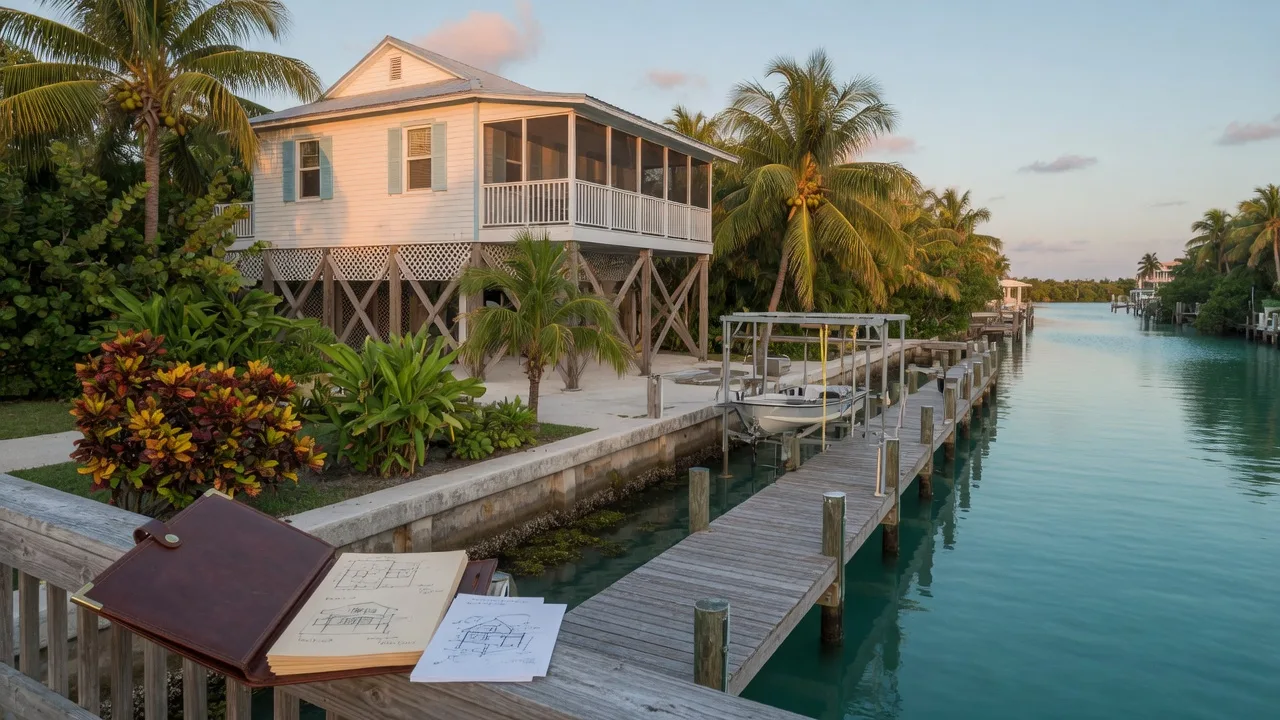
The Waterfront Package Is Where Keys Value Lives
In a mainland market, an appraiser starts with square footage, bedrooms, and lot size. In the Florida Keys, the water package often comes first, and it is where two otherwise identical homes can separate by six figures. A knowledgeable appraiser walks the water line before counting the bedrooms.
- Canal depth at mean low water. The key number is how deep the canal stays at its regular shallowest point. A canal that holds a sportfishing boat or a sailboat at low tide supports a materially higher value than one that goes shallow enough to beach a skiff. Appraisers who know the Keys check depth charts and local knowledge; an appraiser from outside the market often does not, and that is one of the most common reasons a value comes in light.
- Dock, boat lift, and pilings. A functional dock with a boat lift is one of the most valuable features a Keys property can have, and it is worth real money when it is in good condition. The appraiser looks at the dock's size, age, and construction, whether the lift is sound, and whether the pilings are solid and properly permitted.
- Seawall condition. A failing seawall is one of the most expensive liabilities in the Keys, with replacement commonly running into six figures. An appraiser who sees cracked, leaning, or washed-out sections has to discount for that exposure, and a homeowner with a recent seawall repair has a document that belongs in the appraisal file.
- Bridge clearance. If a fixed bridge limits the size of boat that can reach the dock, it caps the value for serious boaters. Two canal homes in the same community can differ in value simply because one sits on the open side of a low bridge.
- Exposure and location on the water. Open-water and oceanfront homes face more wave energy and higher insurance costs, while protected canal homes trade some of that risk for calmer water. The appraisal adjusts for both, and the adjustment requires local judgment.
My waterfront property cost guide breaks down what each piece of the water package costs to own and maintain. The short version for buyers: when you tour a canal home in Key Largo or Islamorada, ask about canal depth, dock permits, and seawall condition before you fall in love with the house, because the appraiser is going to ask the same questions.
Flood Elevation and the Certificate That Decides It
After the water package, flood zone designation and the elevation certificate are the two documents that matter most in a Keys appraisal. A home in a high-risk VE zone, where wave action is expected, carries heavier flood insurance costs than an otherwise similar home in Zone AE or X, and that ongoing cost is part of what a buyer is willing to pay, which means it is part of what an appraiser values.
The elevation certificate is the single most important document in the file. It shows the elevation of the lowest floor relative to the Base Flood Elevation (BFE). A home with its lowest floor two feet above BFE is in a much stronger position for insurance, compliance, and resale than one sitting at or near BFE. Under FEMA's Risk Rating 2.0, that difference directly shapes the flood premium, and an appraiser who understands the Keys weighs it in the value.
Compliance status matters just as much. A structure that would trigger the FEMA 50% Rule, also called the Substantial Improvement Rule, if it were renovated is effectively capped: any meaningful improvement would force the whole structure into compliance with current flood elevation standards, which can cost hundreds of thousands of dollars. An elevated, compliant home appraises more smoothly than a non-conforming one, and that difference is real money. My appraisal issues guide and my flood insurance guide both go deeper on how these rules work in practice.
Condition: What a 2026 Appraiser Actually Inspects
Appraisers rate two different things that buyers often confuse: condition, which is how the property is maintained, and quality, which is how it was built. Both run on a scale of 1 to 6, with 1 being new or excellent and 6 being substantially damaged. A dated but well-maintained home can rate well on condition and average on quality, and the two ratings affect value in different ways.
Deferred maintenance in the Keys has its own signature. Salt air corrodes exterior trim and light fixtures, weathering storms takes shutters and roof shingles, and air conditioning units run year-round. An appraiser looks for the expensive items first: roof age and condition, the AC system, impact windows and doors, the electrical panel, and any signs of rot, mold, or past water intrusion. A roof near the end of its life or an original AC unit past its prime will show up in the report as a condition adjustment, and it can matter more than a dated kitchen, because a dated kitchen functions fine while a failing roof is a cost the next owner will pay.
Under the new appraisal standard that takes effect in November 2026, condition is rated separately for the interior and the exterior, with an overall rating on top, and defects are captured in a structured inventory with photographs. That means the report will document the chipped paint on the window frames and the weathered dock cleats in a way the old forms never did. The good news for sellers: documented improvements, a new roof, impact windows, a repaired seawall, all of that now has a clearer place in the report.
UAD 3.6 Goes Mandatory November 2, 2026: What Changes
The biggest change in Florida Keys appraisals since 2011 takes effect in days, not months. On November 2, 2026, Fannie Mae and Freddie Mac are making their new appraisal data standard, UAD 3.6, mandatory for every new appraisal report submitted to their collateral data portal. It replaces the legacy forms that appraisers have used for years, and it changes how your appraisal is written, how long it takes, and how much it costs.
- One dynamic form replaces the old ones. The legacy Uniform Residential Appraisal Report (Form 1004) and the companion forms for condos, two-to-four-unit properties, and investment properties are consolidated into a single report that adapts to the property type. The new report runs roughly 25 to 30 pages instead of the shorter legacy report.
- Condition and quality are rated twice. The appraiser now rates the interior and the exterior separately on the C1 to C6 and Q1 to Q6 scales, plus an overall rating, instead of one combined judgment.
- Defects get a structured inventory. Apparent defects, damage, and deficiencies are recorded in a structured list tied to the specific component, with photos, instead of being buried in narrative addenda. That makes a failing seawall or an aging roof much harder for an appraiser to gloss over.
- Photos live in the sections they document. Kitchen photos appear in the kitchen section, roof photos in the exterior section, rather than in one centralized photo addendum.
- Wired broadband is verified. The appraiser must research wired internet availability using the FCC's coverage map. Wireless-only service does not count. This matters for buyers who need reliable remote work connections, and it is a new data point in every Keys report.
- The general addendum is gone. Commentary now goes in section-specific fields, which makes the report more structured and more reviewable by the automated systems lenders use.
Expect longer turn times and higher fees in the early months. In a survey of roughly 900 appraisers, 63 percent said they expect longer turnaround times, with about half of those expecting an extra day or two, and 52 percent expect appraisal fees to rise. Report writing is expected to grow from about two to three hours to five to eight hours per assignment while appraisers learn the new software and the new data fields. The GSEs have announced limited exceptions for lenders that run through February 28, 2027, but no buyer should plan around them.
What this means for you: if your Keys closing is scheduled in November or later, build buffer days into your appraisal contingency. If you are under contract with a closing in the next few weeks, ask your lender whether the appraisal has been ordered and whether it will be submitted under the new standard. And if the new, longer report makes a low value feel more intimidating, your options to respond are unchanged: my appraisal gap guide covers reconsideration of value, waivers, and negotiation in detail.
The Documents That Make a Keys Appraisal Smoother
Appraisals are supposed to be independent, but they are only as good as the information available. A few documents, gathered before the appraiser arrives, can make the difference between a report that reflects the property's real value and one that misses. If you are a buyer, share these with your lender early so they can reach the appraiser before the inspection:
- The elevation certificate. If the seller has one, get a copy. It directly informs the flood elevation analysis and insurance picture.
- The flood insurance determination. The current policy and its premium show the property's actual flood cost, which is part of its market value.
- Dock and canal permits. Documentation that the dock, lift, and any dredging or canal work are permitted protects value and avoids surprises.
- Seawall records. A survey, a recent repair invoice, or a condition report tells the appraiser whether the seawall is an asset or a liability.
- Roof and major system dates. Roof age, AC age, impact windows, and the electrical panel, with dates where possible. Recent replacements are value-positive and should be documented.
- A list of recent neighborhood sales. Your agent's comparable sales give the appraiser a head start on the right comps, especially in communities with thin sales like Layton, Big Pine Key, and Summerland Key.
- Condo package, if applicable. For a condo purchase, the association's Fannie and Freddie project approval status, milestone inspection, and Structural Integrity Reserve Study matter as much as the unit itself. My condo financing guide and the condo financing loan page cover what lenders require on the project side.
How Long Does a Keys Appraisal Take in 2026?
The appraisal is ordered after the contract is ratified and the earnest money is deposited, usually within a few business days. The appraiser's on-site inspection typically runs 30 to 60 minutes for a standard home and longer for a large or complex waterfront property, because there is more to measure and photograph. The report follows within a few business days, so the full cycle from order to delivery usually lands around five to ten calendar days.
That timeline widens after November 2, 2026. During the first weeks of the UAD 3.6 mandate, appraisers are learning new software and writing materially longer reports, and industry surveys expect turn times to run a day or two longer, sometimes more. For a closing in November or December, add buffer days rather than assuming the old schedule. After the report is delivered, conventional borrowers have a formal reconsideration of value window, and if you are in the middle of a purchase right now, my step-by-step mortgage process guide shows exactly where the appraisal sits in the overall timeline.
How Buyers and Sellers Can Prepare
The appraisal is one of the few parts of a Keys home sale where preparation genuinely changes the outcome. Here is what each side can do:
For buyers
- Ground your offer in recent sales. The appraisal compares your price to what similar homes actually sold for, not what the seller is asking. Look at closed sales for the same water tier, flood zone, and community before you write an offer.
- Keep the appraisal contingency. In the Keys, where low appraisals are a real possibility on unique waterfront homes, the contingency is your exit and your negotiating leverage. My appraisal gap guide explains the safest ways to compete without waiving it.
- Share documents through your lender. The elevation certificate, flood determination, and any permits or seawall records belong in the appraiser's hands before the value is written, and your lender is the channel.
- Ask whether the appraiser knows the Keys. A Monroe County appraiser who understands canal depth, tier designations, and the 50% Rule is far less likely to miss the mark. It is a fair question to put to your lender.
For sellers
- Put the paperwork in the listing agent's hands. Elevation certificate, dock and seawall permits, roof and AC dates, impact window documentation. If the buyer's appraiser does not see it, it did not happen.
- Address visible deferred maintenance before the inspection. The appraiser photographs what they see. Fresh paint on weathered trim, clean landscaping, and a tidy dock area cost little and read well in the report.
- Document recent improvements. A new seawall, a replaced roof, or a new boat lift should never be invisible to the appraisal. Provide the invoices and dates.
- Price with the appraisal in mind. In a market where the median sale price in the Keys has climbed through 2026, the last closed sales are what the appraiser leans on. A list price far above the nearest comps invites a low report and a renegotiation.
What If the Appraisal Comes in Below Your Offer?
Low appraisals happen in the Keys more often than buyers expect, and they are not a verdict on the house. They are a disagreement between your offer price and the appraiser's evidence-based value, and disagreements are negotiable. The full playbook is in my appraisal gap guide: negotiate the price, split the difference, cover the gap with a larger down payment, request a reconsideration of value with real evidence, or walk away with your deposit under the contingency. FHA borrowers should know that HUD removed borrower-initiated reconsiderations of value in 2025, so raising concerns before the appraisal is ordered matters even more on an FHA file.
Frequently Asked Questions
What do appraisers look for in a Florida Keys home?
Does a dock or seawall add value to a Keys home appraisal?
How long does a home appraisal take in the Florida Keys?
Does the elevation certificate affect my Keys home appraisal?
What is UAD 3.6 and how does it change Keys appraisals?
Know What the Appraisal Will Support Before You Offer
The cleanest way to avoid appraisal surprises is to know what the data supports before you write an offer, and that is exactly where a pre-approval conversation starts. I work with buyers in Key Largo, Tavernier, Islamorada, Marathon, Duck Key, and Key West every week, and part of that work is making sure your offer, your financing, and the appraisal can all agree before you get deep into contract.
Written by Austin Edwards, NMLS #2639747, Ocean Blue Lending
Published October 28, 2026
Complete Keys Appraisal Guide · Appraisal Gap Guide · Waterfront Property Costs · Back to Blog