
Flood insurance is one of the biggest financial factors you will face as a Florida Keys homebuyer, and it is probably the one most mainland transplants underestimate. In the Keys, nearly every property sits in or near a FEMA-designated flood zone, and flood insurance is not optional when you have a mortgage.
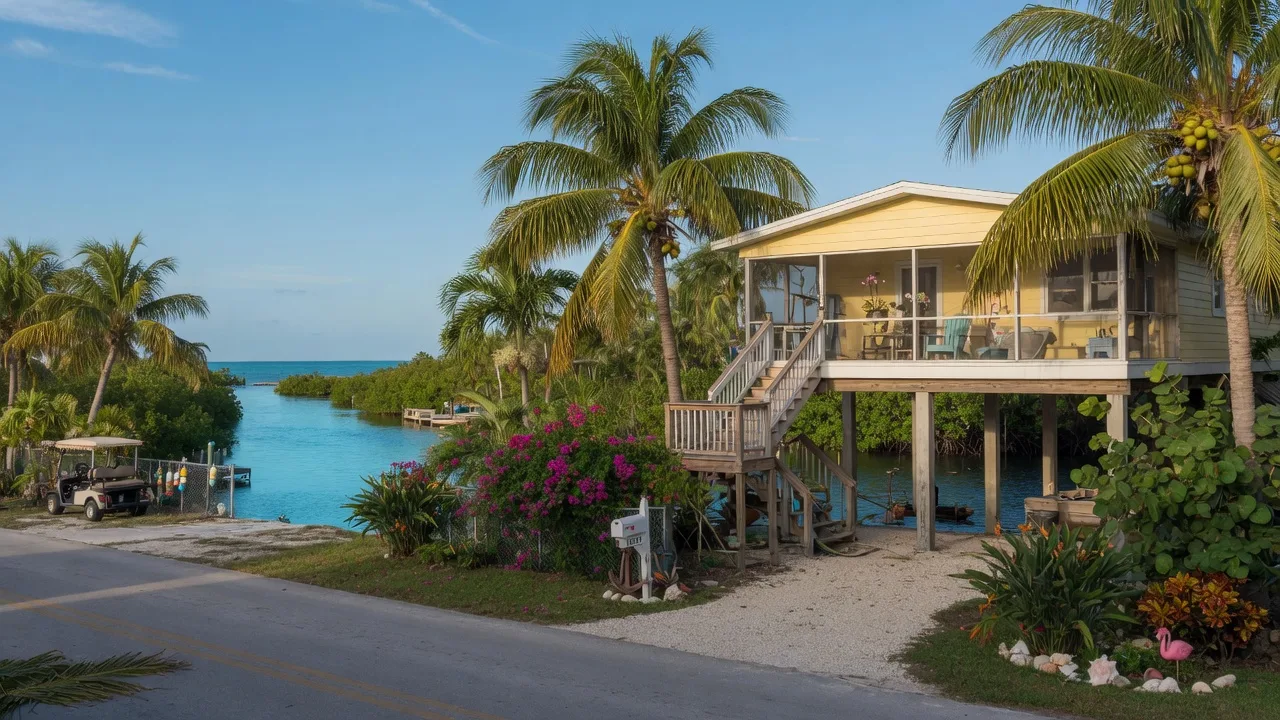
This guide covers everything Keys buyers need to know about flood insurance in 2026: how FEMA's Risk Rating 2.0 changed the pricing model, what different flood zones mean for your budget, how condo flood insurance works differently, and how to avoid surprises when you apply for a mortgage.
Is Flood Insurance Required in the Florida Keys?
For any mortgage backed by a federally regulated lender (which covers most conventional, FHA, VA, and USDA loans), flood insurance is legally required when the property is in a Special Flood Hazard Area (SFHA). Nearly all of the Florida Keys falls within these zones.
Even for properties in moderate-risk Zone X (where flood insurance is not federally mandated), most Keys lenders still require it because the risk is real and the consequences of an uninsured flood loss are severe. In practice, if you are buying a home in the Florida Keys with a mortgage, plan on carrying flood insurance regardless of the zone designation.
This requirement is set by the Flood Disaster Protection Act of 1973 and the National Flood Insurance Reform Act of 1994, and it applies to loans purchased by Fannie Mae, Freddie Mac, FHA, VA, and USDA. There is no workaround for financed properties in high-risk zones.
FEMA Flood Zones in the Florida Keys: What You Need to Know
Flood zone designations in the Florida Keys generally fall into three categories that matter to homebuyers:
- Zone VE (Velocity Zone): Coastal areas subject to wave action during a 100-year flood event. These are the highest-risk zones and typically face the highest flood insurance premiums. Most oceanfront and open-bay-front properties in the Keys are in VE zones.
- Zone AE (Special Flood Hazard Area): Areas subject to still-water flooding during a 100-year flood event. These include canal-front homes, some bay-side properties, and inland low-lying areas. Flood insurance is mandatory.
- Zone X (Moderate-to-Low Risk): Areas outside the 100-year floodplain but still at risk during extreme weather events. Flood insurance is not federally required but is still strongly recommended and often required by Keys lenders.
Your property's flood zone is determined by FEMA Flood Insurance Rate Maps (FIRMs) for Monroe County. These maps are periodically updated, and proposed map changes are a regular topic of discussion for Keys homeowners. Always check the current FIRM for the specific property you are considering, because a zone change between the time you make an offer and the time you close can significantly affect your insurance costs.
For Key Largo, Islamorada, Marathon, and Key West, flood zone maps vary significantly by neighborhood. Even properties just a few blocks apart can fall into different zones with very different insurance costs.
How FEMA's Risk Rating 2.0 Changed Flood Insurance Pricing
In 2021, FEMA introduced Risk Rating 2.0, a complete overhaul of how NFIP flood insurance premiums are calculated. Fully implemented by October 2023, this system replaced the old method that based rates primarily on flood zone designations.
Under Risk Rating 2.0, each property is individually rated based on:
- Proximity to the coast, bay, canals, and other water bodies
- Building elevation relative to the Base Flood Elevation
- Type of construction and foundation (pile, slab, elevated)
- Frequency and type of flooding in the area
- Propensity for excessive rainfall and storm surge
- Cost to rebuild (replacement cost value)
- Number of prior NFIP claims on the property
The practical effect for Florida Keys homeowners has been significant. According to Fair Insurance Rates in Monroe (FIRM), over 90 percent of Monroe County homeowners saw rate increases under Risk Rating 2.0. The old system often gave discounted rates to elevated stilt homes in coastal zones, while Risk Rating 2.0 uses detailed property-level data, so even well-elevated homes on the water now face premiums that better reflect their true risk.
Under federal law, annual premium increases are capped at 18 percent for primary residences and 25 percent for second homes and investment properties. This creates a gradual glide path toward full-risk premiums, but it also means that buyers purchasing a property with an older, below-risk-rate NFIP policy should expect continued annual increases for years to come.
How Much Does Flood Insurance Cost in the Florida Keys?
Flood insurance costs in the Florida Keys vary widely depending on the property, but here are the general ranges for 2026:
- Median NFIP policy in Monroe County: Approximately $1,260 per year
- Elevated single-family home in moderate-risk Zone X: $700 to $1,500 per year
- Standard elevated home in Zone AE (canal or bay side): $2,000 to $4,000 per year
- Coastal property in Zone VE (oceanfront or open bay): $4,000 to $8,000 per year
- High-value coastal properties: $10,000 to $25,000 per year
- New, elevated, code-compliant construction: $4,000 to $5,000 per year typically
These are flood-only premiums. Combined with wind insurance (typically $4,000 to $12,000 per year for single-family homes) and standard hazard insurance, total annual insurance costs in the Keys often range from $15,000 to $25,000 or more. That is a significant monthly cost that must be factored into your budget from day one.
It is also worth noting that private flood insurance options are available in the Florida Keys alongside NFIP policies. Private insurers may offer lower rates for well-elevated properties with good claims history, or for properties in lower-risk zones. A licensed insurance agent who specializes in Monroe County can quote both NFIP and private options to find the best fit.
Flood Insurance for Condos in the Keys
If you are buying a condominium in the Florida Keys, flood insurance works differently than it does for single-family homes. The condo association typically maintains a master flood insurance policy called a Residential Condominium Building Association Policy (RCBAP) through the NFIP, or an equivalent private policy. This master policy covers the building structure, common areas, and building components inside individual units (flooring, cabinets, drywall, and built-in fixtures).
In high-risk flood zones, the condo association is required by law to carry the RCBAP covering at least 80 percent of the building's replacement cost to avoid coinsurance penalties. For NFIP policies, the maximum coverage is $250,000 per unit multiplied by the number of units in the building.
As a condo unit owner, you still need your own individual flood insurance policy. Your personal policy covers your belongings (furniture, electronics, clothing) and any upgrades or improvements you have made to the unit beyond the building standard. The NFIP offers contents-only coverage up to $100,000 for condo unit owners.
When financing a condo, your lender will review the HOA's master flood insurance policy to confirm it meets minimum coverage requirements. This is part of the condo project approval process. If the HOA's flood coverage is inadequate or the policy lapses, the condo may not qualify for financing until the issue is resolved.
For a deeper look at this topic, visit the Flood Insurance Learning Center page.
How Flood Insurance Affects Your Mortgage
Flood insurance affects every mortgage in the Florida Keys in three ways:
1. It is a condition of closing. Your lender requires proof of flood insurance (or evidence that the property is in a low-risk zone) before closing. If you cannot obtain flood insurance, you cannot close the loan.
2. It affects your debt-to-income ratio. The annual flood insurance premium is divided by 12 and added to your proposed monthly housing payment. For a $3,000 annual premium, that adds $250 per month to your qualifying payment. Combined with wind insurance and property taxes, insurance costs can significantly reduce the purchase price you qualify for.
3. It is escrowed. Lenders typically require flood insurance premiums to be paid through an escrow account alongside property taxes and homeowners insurance. Your monthly mortgage payment includes one-twelfth of the annual premium, and the lender pays the policy when it renews.
For conventional loans, flood insurance is required in any SFHA by Fannie Mae and Freddie Mac guidelines. The same applies to FHA loans, VA loans, and jumbo loans — all require proof of flood insurance for high-risk properties before closing.
Flood Insurance for Second Homes and Investment Properties
Flood insurance requirements do not change based on how you use the property. A second home in the Florida Keys or an investment property faces the same flood insurance rules as a primary residence. The lender requires coverage regardless of occupancy.
However, there is an important difference in rate caps. Under Risk Rating 2.0, second homes and investment properties face a higher annual increase cap of 25 percent compared to 18 percent for primary residences. This means the premiums on non-primary properties can rise faster, which is an important consideration if you are buying a vacation home or rental property in the Keys.
For DSCR loans on vacation rentals, flood insurance is factored directly into the property's operating expenses when calculating the Debt Service Coverage Ratio. An accurate flood insurance quote is essential for determining whether the rental income covers the debt service.
How to Get an Accurate Flood Insurance Quote Before You Buy
One of the biggest mistakes Keys buyers make is waiting until they are under contract to find out what flood insurance will cost. Here is how to avoid that:
- Get the FEMA FIRMette. Your real estate agent or a local insurance agent can pull the official FEMA flood map for the specific property address. This shows the zone designation and Base Flood Elevation.
- Check the elevation certificate. Most elevated Keys homes have an elevation certificate on file with the county. This document shows the elevation of the lowest floor relative to the Base Flood Elevation, which directly affects the premium. If the seller does not have one, factor the cost of a new elevation certificate ($300 to $600) into your due diligence budget.
- Ask for the current NFIP policy declaration page. The seller's current flood policy declaration page shows the policy number, coverage amount, annual premium, and what zone/elevation data the current rate is based on. This gives you a starting point for what you might expect to pay.
- Quote with an experienced Keys insurance agent. Use an agent who specializes in Monroe County flood insurance and understands Risk Rating 2.0, private market alternatives, and the nuances of elevated vs. non-elevated properties.
- Check for any prior claims. Under Risk Rating 2.0, a property's claims history directly affects the premium. A property with multiple prior flood claims will face a higher premium regardless of its current elevation or construction quality.
Flood Insurance vs. Wind Insurance: Understanding the Difference
Many first-time Keys buyers confuse flood insurance with wind insurance. They are separate policies covering different perils, and you need both.
- Flood insurance covers damage from rising water, storm surge, tidal flooding, and heavy rainfall that causes standing water. This is handled through the NFIP or private flood insurers.
- Wind insurance covers damage from hurricane-force winds, tornadoes, and wind-driven rain that enters through broken openings. This is typically part of a standard homeowners policy on the mainland but is often a separate wind-only policy in the Keys.
During a hurricane, both flood and wind damage can occur at the same property. If a tree falls through your roof during a storm, that is wind damage. If the storm surge floods your ground floor, that is flood damage. Without both policies, you could face tens of thousands of dollars in uncovered losses.
Combined annual premiums for flood, wind, and standard hazard insurance in the Florida Keys typically range from $15,000 to $25,000 or more. This is a real cost that belongs in your homebuying budget from the very first conversation with your lender.
The Advocacy Picture: FIRM and Monroe County
Fair Insurance Rates in Monroe (FIRM) has been advocating for affordable flood insurance since 2006. The group has challenged NFIP rate increases, pushed for transparency in Risk Rating 2.0 methodology, and worked with Monroe County government to lobby Congress for flood insurance reform.
Monroe County maintains a dedicated flood insurance information portal and works with FEMA on map updates and mitigation planning. The county's floodplain management program helps property owners understand their flood risk and the steps they can take to reduce it.
For buyers, this advocacy matters because it helps keep the conversation about affordable flood insurance alive at the state and federal level. But it does not change the reality that flood insurance is a significant, non-negotiable cost of Keys homeownership today.
What to Ask Before Making an Offer
Before you make an offer on any Keys property, here are the flood insurance questions you or your agent should ask:
- What is the FEMA flood zone designation for this property?
- What is the current annual flood insurance premium?
- Is there an elevation certificate on file, and what is the lowest floor elevation?
- Has the property had any prior flood insurance claims?
- Is the property insured through NFIP or a private carrier?
- If this is a condo, what does the HOA's master flood policy cover and what is its deductible?
- Are there any proposed FEMA map changes that could affect this property's zone designation?
Getting clear answers during the inspection period means no surprises when you sit down at the closing table.
Frequently Asked Questions
Is flood insurance required for a mortgage in the Florida Keys?
How much does flood insurance cost in the Florida Keys in 2026?
Does a condo owner in the Keys need individual flood insurance?
How does FEMA Risk Rating 2.0 affect Florida Keys flood insurance rates?
Can I use private flood insurance instead of NFIP in the Florida Keys?
Ready to Get Started?
Flood insurance does not have to be a dealbreaker. With the right information, an accurate quote, and a mortgage professional who understands Keys coastal financing, you can budget correctly and buy with confidence.
I work with Keys buyers every day to structure financing that accounts for the full cost of Keys homeownership, including flood insurance, wind insurance, and hazard coverage. If you are looking at properties in the Florida Keys, let us talk through the numbers before you make an offer.
Written by Austin Edwards, NMLS #2639747, Ocean Blue Lending
Published August 10, 2026
Flood Insurance Guide · Wind Insurance Guide · Learning Center