
Appraisals in the Florida Keys are different from appraisals anywhere else in the country. The combination of FEMA flood regulations, Monroe County's unique land-use rules, the FEMA 50% Rule, limited comparable sales, and the sheer variety of waterfront property types means that a Florida Keys appraisal is a specialized process that many mainland appraisers are not equipped to handle.
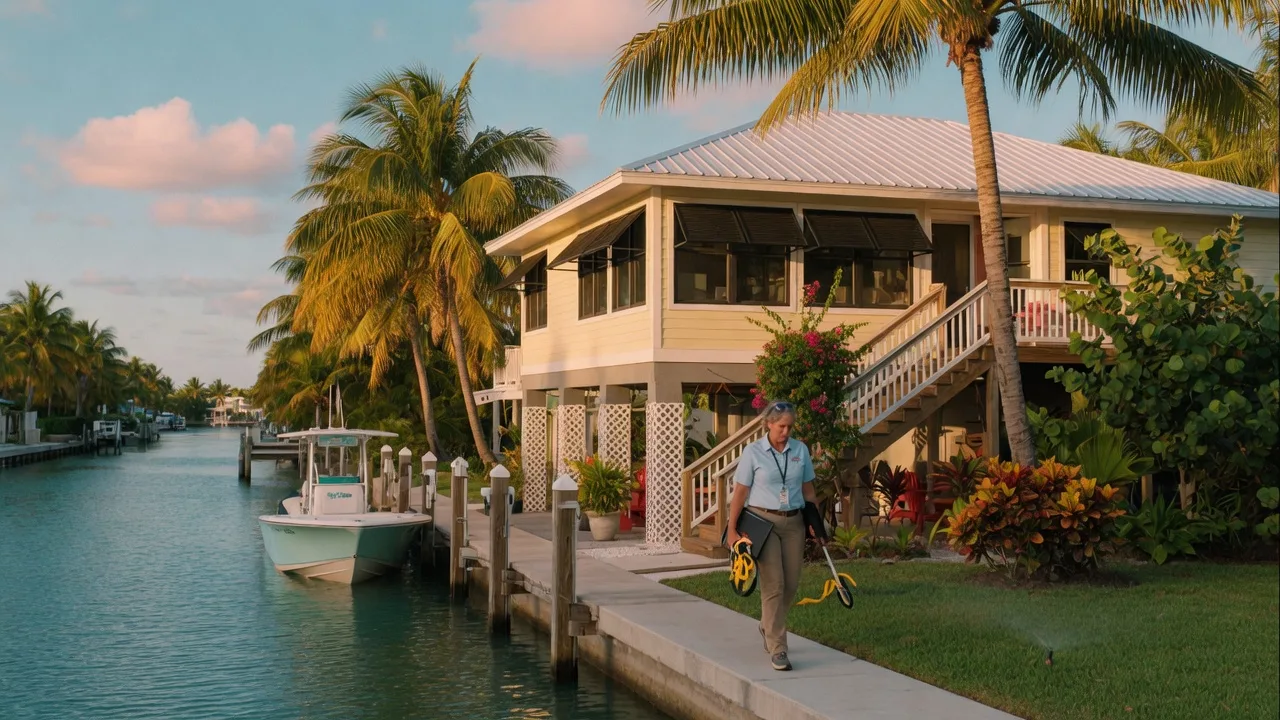
This guide covers the most common appraisal issues Keys buyers face, how the FEMA 50% Rule affects property values, what happens when an appraisal comes in low, and how to set yourself up for a smooth appraisal when you are financing a home in the Florida Keys.
What Makes Florida Keys Appraisals Unique?
An appraisal is an unbiased estimate of a property's market value based on comparable sales, property condition, location, and market trends. Every financed home purchase requires one. But in the Florida Keys, appraisers face challenges that simply do not exist in most other markets.
Here is what makes Keys appraisals different:
- Limited comparable sales. The Florida Keys have a relatively small number of homes, and the inventory of recently sold homes is often thin. For unique properties, finding three to five truly comparable sales within the past six months can be difficult or impossible, especially in smaller communities like Layton, Duck Key, or Summerland Key.
- Extreme property diversity. Two homes on the same street can have vastly different values depending on canal depth, seawall condition, dock configuration, flood zone, elevation, and whether the home is elevated on pilings or slab-on-grade.
- FEMA flood zone and elevation factors. A property's FEMA flood zone designation and its elevation relative to the Base Flood Elevation directly affect insurability and long-term costs, which in turn affect market value. Appraisers must consider these factors, but not all appraisers are trained to do so.
- The FEMA 50% Rule (Substantial Improvement Rule). This is one of the most important and least understood factors in Keys property valuation. If the cost of improvements to a structure exceeds 50 percent of its pre-improvement market value, the entire structure must be brought into compliance with current flood elevation standards. This can directly cap the value of a property that is non-conforming.
- Monroe County land-use regulations. The county's Comprehensive Plan includes a tier system that restricts development density and intensity based on location. An appraiser unfamiliar with the Comp Plan can easily misvalue a property's development potential.
- Specialized appraiser shortage. Not every appraiser understands the Florida Keys market. Some lenders may assign an appraiser from outside the Keys who lacks local knowledge, leading to inaccurate valuations.
The FEMA 50% Rule: What Every Keys Buyer Should Know
The FEMA 50% Rule, also called the Substantial Improvement Rule, is governed by federal regulations (44 CFR 59.1) and enforced by Monroe County and local municipalities. It applies to any structure in a Special Flood Hazard Area that has been "substantially improved" or "substantially damaged."
Here is how it works: if the cost of improvements or repairs to a building equals or exceeds 50 percent of the building's pre-improvement market value (not including the land), the entire structure must be brought into full compliance with current floodplain management regulations. That means elevating the lowest floor above the Base Flood Elevation, installing proper flood openings, and meeting all current building code requirements for the High-Velocity Hurricane Zone.
For a non-elevated home in a flood zone, bringing it into compliance can cost hundreds of thousands of dollars. This effectively caps the value of a non-conforming structure because a buyer would be purchasing a property that cannot be significantly improved or renovated without triggering a massive compliance cost.
How the 50% Rule affects appraisals: An appraiser who understands the 50% Rule will factor a property's compliance status into the valuation. A property that is already elevated above BFE and meets current flood standards is worth more than an identical non-elevated property that would trigger the 50% Rule with any meaningful renovation. But an appraiser who does not understand the Keys market may not know to make this adjustment, which can lead to an inflated appraisal that the lender's underwriting department may flag or reject.
Monroe County maintains a Substantial Improvement / Substantial Damage FAQ on its website, and the City of Key West has dedicated guidance on this topic. If you are considering a property built before current flood elevation standards were adopted, always ask whether the structure is in compliance and whether any prior work triggered the 50% Rule.
Flood Zone and Elevation: How They Affect Appraised Value
Flood zones and elevation certificates play a direct role in property valuation. A home in a high-risk Zone VE (Velocity Zone, subject to wave action) will face higher flood insurance costs than a home just inland in Zone AE or Zone X. Two homes that are otherwise identical can have very different total costs of ownership because of their flood zone designation alone.
The elevation certificate is the key document. It shows the elevation of the lowest floor relative to the Base Flood Elevation. A home with the lowest floor two feet above BFE is in a much stronger position than one that sits at or below BFE. The elevation certificate directly affects flood insurance premiums under FEMA's Risk Rating 2.0, and an appraiser should consider it when determining market value.
What happens when the FEMA flood maps change? FEMA periodically updates Flood Insurance Rate Maps for Monroe County, and map changes can shift a property from Zone X to Zone AE, or from Zone AE to Zone VE. A map change that places a property in a higher-risk zone can increase insurance costs and reduce the property's value. Appraisers should be aware of proposed map changes, but not all of them will be when they are operating outside the Keys market.
Waterfront Valuation: The Challenge of Unique Properties
Waterfront properties in the Florida Keys are not all valued the same way. A canal-front home with deep-water access to the Atlantic is worth more than one on a shallow canal that goes dry at low tide. An oceanfront lot with direct beach access commands a premium over a bay-side property. And a home with a functional dock, boat lift, and seawall in good condition can be worth significantly more than one with a dilapidated seawall and no dock.
Here are the waterfront-specific factors that appraisers should evaluate:
- Canal depth at Mean Low Water. A canal that is deep enough for a sailboat or sportfisherman is more valuable than a shallow canal suitable only for a skiff.
- Bridge clearance. Fixed bridges that restrict vessel size can limit the value of a canal-front property for boat owners.
- Seawall condition. A failing seawall can cost $100,000 or more to replace. An appraiser should note seawall condition and adjust value accordingly.
- Dock and boat lift. The presence, size, and condition of a dock and boat lift affect the property's utility and value.
- Exposure. Oceanfront properties face more direct wave energy and storm surge than canal-front or bay-side properties, which affects insurance costs and long-term maintenance requirements.
When an appraiser is not familiar with Keys waterfront properties, they may miss these nuances and assign a value that does not reflect the property's true market position. This is one of the most common reasons for appraisal disputes in the Keys.
What Happens When an Appraisal Comes in Low?
An appraisal that comes in below the contract price is one of the most stressful situations a Keys buyer can face. Here is what happens and what your options are:
The lender uses the lower value. Your mortgage is based on the appraised value, not the contract price. If the home appraises for $700,000 but you agreed to pay $750,000, the lender will base your loan-to-value ratio on $700,000. If you were putting 20 percent down, that means your down payment goes from $150,000 to $170,000, and you may need to come up with an additional $50,000 in cash, or the deal falls through.
Your options when the appraisal is low:
- Negotiate the price. The most common outcome. The buyer and seller renegotiate to the appraised value or a price in between. A seller who does not want to lose the deal may agree to meet at the appraised value.
- Challenge the appraisal. If you believe the appraiser missed key information (a comparable sale, an elevation certificate, seawall condition), your lender can request a reconsideration of value. Provide the appraiser with additional data and ask them to re-evaluate.
- Bring more cash. If you can cover the gap between the appraised value and the contract price with additional down payment, the deal can proceed. This is most feasible for buyers who were already putting down a large down payment.
- Request a second appraisal. Some lenders allow a second appraisal at the buyer's expense if the first one appears flawed. This is not guaranteed, and the lender is not required to accept the higher of the two values.
- Walk away. If your contract has an appraisal contingency, you can terminate the agreement and get your earnest money deposit back. This is the cleanest option if the gap is too large to bridge.
An appraisal contingency in your purchase contract is essential in the Florida Keys market. Without it, you could be contractually obligated to buy the property at the agreed price even if the appraisal comes in low, and you would have to cover the difference in cash or forfeit your deposit.
How to Set Your Keys Home Up for a Smooth Appraisal
As a buyer, there are steps you can take before the appraisal happens to reduce the risk of a low valuation:
- Work with a local real estate agent. A Keys agent who knows the local market can help you price your offer realistically based on recent comparable sales, not just the seller's asking price.
- Share comparable sales with your lender early. If you and your agent have identified recent sales that support the contract price, share them with your lender before the appraisal is ordered. The lender can pass them to the appraiser.
- Provide the elevation certificate. If the seller has an elevation certificate, ask your agent to get a copy and share it with the appraiser. This document helps the appraiser understand the property's flood risk and compliance status.
- Check for the 50% Rule compliance. Ask whether the property has had any prior improvements that triggered compliance review. A property with a clean compliance history is easier to appraise.
- Verify the appraiser's local experience. Ask your lender whether the appraiser has experience with Florida Keys properties. A local appraiser who understands the Keys market, Monroe County regulations, and waterfront valuation is far less likely to produce a value that misses the mark.
- Keep the appraisal contingency. Never waive the appraisal contingency in a Florida Keys purchase contract. The unique factors in this market make low appraisals a real possibility, and the contingency protects your deposit.
Appraisal Issues by Property Type
Different property types in the Keys face different appraisal challenges. Here is a breakdown:
Single-Family Homes
For single-family homes, the biggest appraisal issues are usually the 50% Rule, flood zone designation, and elevation compliance. A non-elevated home on a slab in a flood zone is a red flag for both appraisers and lenders. Elevated homes on pilings with current elevation certificates tend to appraise more smoothly.
Condominiums
Condo appraisals in the Keys are driven by comparable unit sales within the same complex, not the building's structural features. The appraisal challenges for condos are usually related to the condo project approval status, the HOA's financial health, and the master insurance policies. An appraiser will check whether the condo project is Fannie Mae or Freddie Mac approved, and whether the HOA maintains adequate reserves for structural repairs and insurance deductibles. The post-Surfside structural integrity requirements have added a new layer of complexity to condo valuations across the Keys, and appraisers should be aware of whether the association has completed its milestone inspection and has a Structural Integrity Reserve Study (SIRS) in place. For more detail, see the condo financing guide.
Vacant Land
Vacant land appraisals are among the hardest in the Florida Keys because comparable sales are scarce, and the value depends heavily on the Monroe County Comprehensive Plan tier designation, flood zone, elevation, and whether a building permit can be obtained. A lot that is buildable with a septic system is worth more than one that is not. An appraiser unfamiliar with the Comp Plan tier system may assign a value that does not reflect the lot's development limitations.
Investment and Vacation Rental Properties
For investment properties and vacation rentals, the appraisal is based on the property's value as a residential dwelling, not its income-generating potential. The rental income does not directly affect the appraised value, although it can affect the DSCR loan qualification. An appraiser may note whether the property is in a short-term rental zone, but the valuation is still based on comparable sales of similar properties.
Appraisal Issues by Location
Appraisal challenges vary across the Keys. Here is what to expect in different areas:
- Key Largo and Tavernier: More inventory and more comparable sales than the rest of the Keys. Ocean Reef and Port Largo subdivisions have their own micro-markets with distinct price ranges. The Ocean Reef area, in particular, has a limited pool of comparable sales that can make appraisals challenging for high-end properties.
- Islamorada: Deep-water canal homes and oceanfront properties trade at wide price ranges. Finding comparable sales for a unique waterfront property can be difficult.
- Marathon and Duck Key: The Sombrero Beach area and gated communities like Duck Key have their own sub-markets. Appraisers need local knowledge to assign accurate values.
- Key West: A unique market with historic properties, nonconforming structures, and some of the highest per-square-foot prices in the state. Appraisals in Old Town Key West require specialized knowledge of historic district regulations and the unique character of the housing stock.
- Big Pine Key and Summerland Key: Lower inventory and fewer comparable sales. The National Key Deer Refuge and the county's tier system both affect land use and development potential, which can complicate appraisals.
How Lenders Handle Appraisal Issues in the Keys
As a mortgage loan originator who works in the Florida Keys market, I can tell you that lenders who understand the Keys are better equipped to handle appraisal challenges. Here is what experienced Keys lenders do differently:
- They select appraisers with local experience. Whenever possible, they request an appraiser who has demonstrated knowledge of the Florida Keys market, including the Monroe County Comp Plan, flood zone regulations, and waterfront valuation.
- They review the appraisal for completeness. An experienced lender reviews the appraisal report for missing or incorrect information, such as an incorrect flood zone designation or a failure to consider the elevation certificate.
- They know when to request a reconsideration of value. If the appraisal missed a comparable sale or key property feature, they can formally request a re-evaluation with supporting documentation.
- They set expectations upfront. A good lender tells you before you make an offer how the appraisal process works in the Keys and what risks to watch for.
Frequently Asked Questions
What is the FEMA 50% Rule and how does it affect my Florida Keys home appraisal?
What happens if a Florida Keys home appraises for less than the purchase price?
How do I find a Florida Keys appraiser who knows the local market?
Does an elevation certificate affect my Florida Keys home appraisal?
Why are there so few comparable sales for Florida Keys appraisals?
Ready to Get Started?
Appraisal issues do not have to derail your Florida Keys home purchase. With the right preparation, a local real estate agent, and a lender who understands the Keys market, you can navigate the appraisal process with confidence.
I work with Keys buyers every day to structure financing that accounts for the unique factors in this market, including flood zone regulations, the 50% Rule, and waterfront valuation. If you are looking at properties in the Florida Keys, let us talk through the numbers before you make an offer.
Written by Austin Edwards, NMLS #2639747, Ocean Blue Lending
Published August 25, 2026
Condo Financing Guide · Flood Insurance Guide · Learning Center