
Most Florida Keys jumbo loans require between 10 and 20 percent down, and 10 percent down is available on loans up to roughly $2 million for well-qualified buyers. Second homes and investment properties, which make up a large share of Keys purchases, typically require 20 to 30 percent down. This guide breaks down the down payment math for jumbo buyers in Monroe County: the 2026 conforming limit, the 10 percent down programs that exist, how your down payment shapes your rate, and the reserves and documentation that come with high-balance financing.
If you are new to jumbo financing, my complete jumbo loan guide walks through what a jumbo loan is and how the programs work, and my jumbo qualification guide covers credit, debt-to-income, and reserves. This article goes deeper on the one number buyers ask about first: the down payment, and how much you actually need depending on the property you are buying.
When a Keys Purchase Becomes a Jumbo Loan
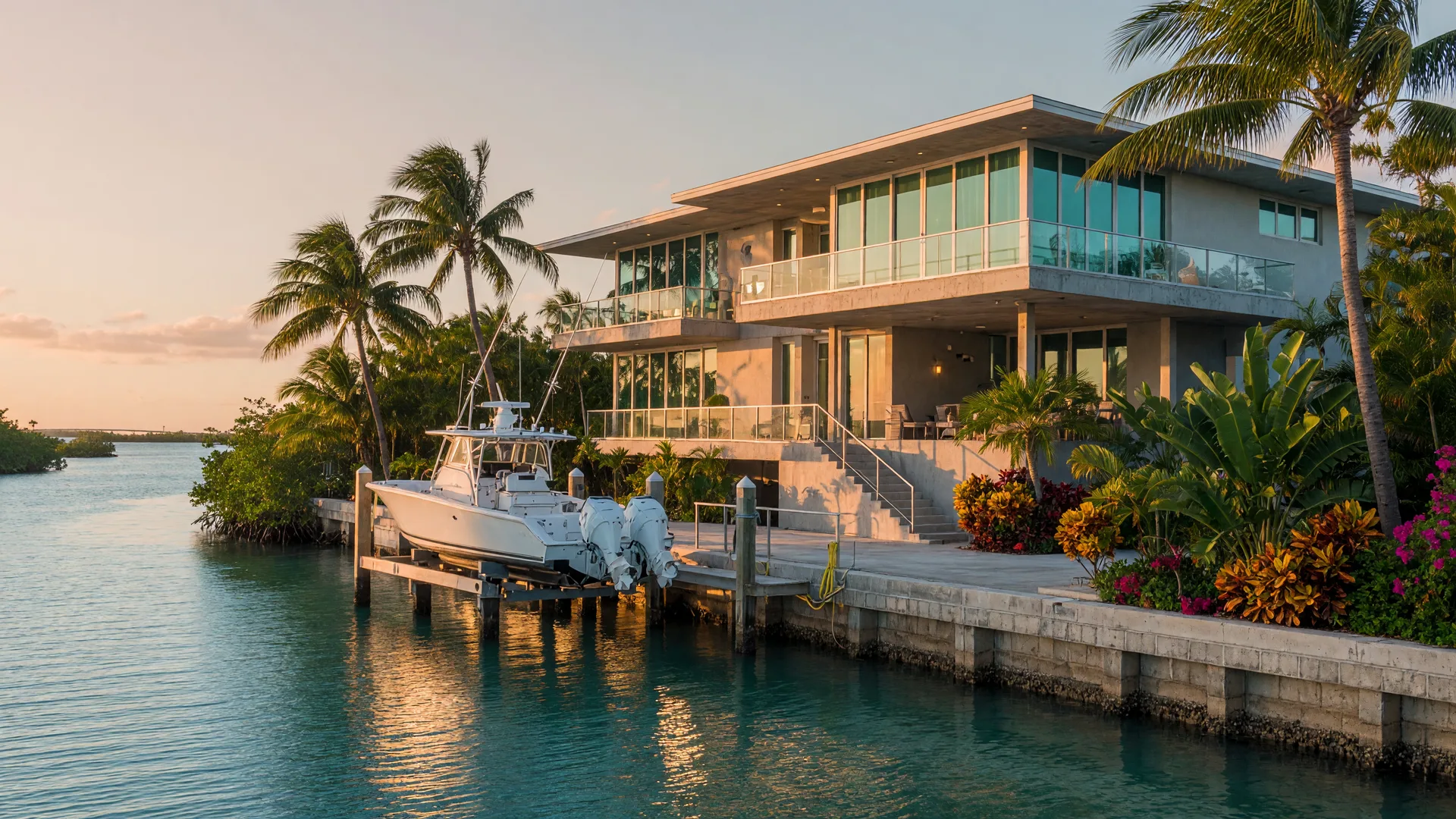
In Monroe County, the 2026 conforming loan limit is $990,150, which is well above the national baseline of $832,750 because the Keys are designated a high-cost area. Any loan amount above $990,150 is a jumbo loan. In practical terms, that means a $1.2 million canal home in Key Largo with 20 percent down needs a jumbo loan of $960,000, while the same home with 10 percent down needs a jumbo loan of $1.08 million. Because Keys prices are what they are, most buyers financing a waterfront or newer single-family home end up in jumbo territory whether they plan to or not.
The Down Payment Range for Keys Jumbo Loans
Jumbo down payment requirements in 2026 fall into a fairly predictable range, and the biggest variable is not the loan amount, it is how the property is classified:
- Primary residences: 10 to 20 percent down is common, with the lower end available to buyers with strong credit and solid reserves.
- Second homes: expect 20 percent down as the typical minimum, and some lenders want more.
- Investment properties: 20 to 30 percent down is the normal range, and the higher end applies to larger loans.
- Very large loans, roughly $2 million and up: some lenders move to 20 to 30 percent down across the board, regardless of occupancy.
Because so many Keys purchases are second homes or investment properties, the 20 to 30 percent range is genuinely common here. If you are buying a vacation rental and want to qualify on the property's income instead of your own, a DSCR loan is a separate path worth comparing, and my DSCR investor guide covers how those programs price down payments.
Can You Really Get a Jumbo Loan with 10% Down?
Yes, and this is one of the most useful facts for Keys buyers: 10 percent down jumbo programs are widely available in 2026, typically on loan amounts up to about $2 million. The requirements are stricter than a 20 percent down deal, usually a credit score of 720 or higher (740 preferred), full documentation of income and assets, and strong cash reserves. Some of these 10 percent down programs also waive private mortgage insurance, which is a meaningful monthly saving on a high-balance loan.
The trade-off is pricing. A 90 percent loan-to-value jumbo carries a higher rate than an 80 percent LTV jumbo, so the 10 percent down option is not free money. It is a way to get into a waterfront home sooner, or to keep more cash for the insurance prepaids, dock work, and furnishings that Keys purchases tend to need. For many buyers the real question is whether the slightly higher rate is worth preserving liquidity, and that is a personal decision, not a universal one.
How Your Down Payment Shapes Your Jumbo Rate
On jumbo loans, loan-to-value drives pricing more visibly than on conforming loans. The common pricing tiers look like this:
- 20 percent down (80% LTV): the best jumbo pricing for most borrowers.
- 15 percent down (85% LTV): a modest rate step-up, often a small fraction of a point.
- 10 percent down (90% LTV): a larger step-up, sometimes a quarter point or more, offset by the fact that many programs waive mortgage insurance here.
Because jumbo loans are not sold to Fannie Mae and Freddie Mac the way conforming loans are, each lender prices its own portfolio, and the spread between LTV tiers varies by lender. That is why shopping matters more on a jumbo than on almost any other loan type. Two lenders can quote meaningfully different rates on the same $1.2 million purchase, and the difference is often in how they tier down payments.
Second Homes and Investment Properties: The 20 to 30 Percent Reality
If you are buying a second home in Islamorada or an investment property in Key West, plan on 20 percent down at minimum, and often more. The 10 percent down programs that exist for primary residences rarely extend to second homes, and they almost never extend to investment properties. Lenders view vacation and rental properties as higher risk, so they protect themselves with bigger down payments, higher rates, and stricter reserve requirements.
My second home loan page and investment property loan page walk through the differences in detail. The short version: if your Keys property will be rented part of the year or is not your primary residence, budget for a bigger down payment and confirm the exact requirement with your lender before you make an offer.
Gift Funds, Seller Concessions, and Where Jumbo Rules Get Stricter
Jumbo loans allow gift funds from family members, but the rules are tighter than on conforming loans. Some lenders cap the gift portion of the down payment, and most require the borrower to contribute a meaningful amount of their own money, often 5 percent of the purchase price. If you are planning to use a gift from a parent for part of your down payment, tell your lender early so they can confirm their specific gift policy before you get deep into the process.
Seller concessions are also more limited on jumbo loans, typically capped around 3 percent of the purchase price, compared to the larger allowances on conforming and government loans. In a market where sellers are paying some of the buyer's closing costs, that cap matters. And on reserves: most jumbo lenders want 6 to 12 months of mortgage payments in liquid assets after closing, and the requirement tends to scale with loan size and with second home and investment classifications. A $1.5 million jumbo with a $9,000 monthly payment can require $80,000 or more in reserves, on top of your down payment and closing costs.
Do Jumbo Loans Require Mortgage Insurance?
It depends on the program. Many 10 percent down jumbo programs waive private mortgage insurance entirely, which is one of their biggest advantages. Others carry borrower-paid or lender-paid mortgage insurance, where the lender pays the premium in exchange for a slightly higher rate. The key point: on a jumbo, mortgage insurance is not a fixed rule the way it is on a conforming loan with less than 20 percent down. It is a pricing decision each lender makes, so it is worth asking directly whether the quote you are looking at includes mortgage insurance and what the rate would be without it.
The Zero Down Exception: VA Jumbo Loans
If you have VA entitlement, a VA jumbo loan can finance above the conforming limit with zero down, subject to lender overlays and the value of the property. This is the one genuinely zero down path to a high-balance Keys mortgage, and it is worth exploring if you are a veteran or active-duty service member. My VA loan page covers the program in depth, and my VA loan guide explains the entitlement math.
What Jumbo Rates Look Like Right Now
As of the first week of October 2026, national averages for a 30-year fixed jumbo were running around 7.6 percent, with conforming 30-year rates around 7.4 to 7.5 percent. That puts jumbo pricing roughly 15 to 20 basis points above conforming, a reversal from earlier in the year when jumbo rates sometimes matched or beat conforming. The gap is modest by historical standards, but it is real, and it is one more reason to compare quotes carefully on high-balance loans. Your actual rate depends on your credit score, down payment, loan amount, and property type, and rates move daily, so the smart play is to check current rates and lock once you have a signed contract.
How to Plan Your Down Payment Before You Shop
Before you start touring homes, run the numbers on the total cash you will need. On a Keys jumbo purchase, that means the down payment plus closing costs plus prepaid insurance plus reserves, and the insurance piece is not small. Flood and wind coverage on a waterfront home can add thousands to your annual costs, which affects both your budget and your qualifying ratios. My flood insurance guide and wind insurance guide give you a realistic picture of those premiums.
Use the mortgage calculator to see how different down payments change your payment, then talk to a lender about which LTV tier you would actually qualify for. A buyer with 740 credit and strong reserves may find that 10 percent down is available at a reasonable rate, while another buyer with the same down payment and a 700 score may be pushed toward 15 or 20 percent. The down payment is not a single number, it is a range, and your specific credit and reserve profile decides where you land.
Frequently Asked Questions
What is the minimum down payment for a jumbo loan in 2026?
Can I get a jumbo loan with 10% down?
Do jumbo loans require private mortgage insurance?
Can I use gift funds for a jumbo loan down payment?
How much down payment do I need for a jumbo loan on a second home or investment property in the Keys?
Ready to Plan Your Keys Jumbo Purchase?
I will show you exactly how much down payment you need for the property you are considering, which LTV tier you qualify for, what rate that earns, and what reserves the lender will require. That is the honest way to know whether a purchase works before you make an offer, whether you are buying in Key Largo, Marathon, Islamorada, Key West, or anywhere along the Keys. No pressure, no jargon, just the numbers.
Written by Austin Edwards, NMLS #2639747, Ocean Blue Lending
Published October 7, 2026
Jumbo Loans in the Florida Keys · Jumbo Loan Requirements 2026 · Primary vs Second Home vs Investment · Back to Blog