
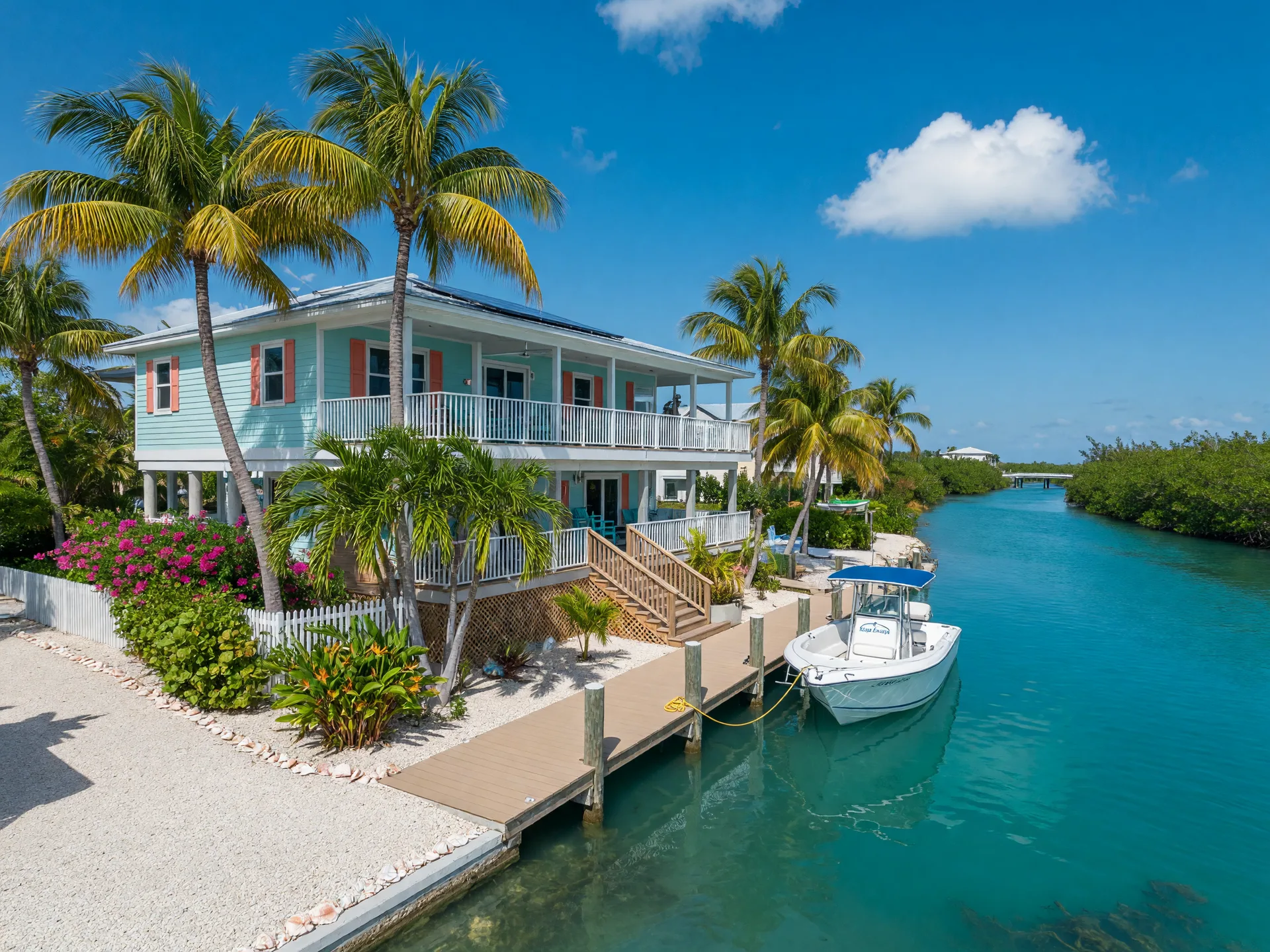
The Florida Keys are one of the strongest vacation rental markets in the country. If you are looking to buy an investment property here, DSCR loans are one of the most practical financing tools available. Here is how they work, what the requirements are, and what every Keys investor should understand before applying.
What Is a DSCR Loan?
DSCR stands for Debt Service Coverage Ratio. It is a type of investment property loan where qualification is based on the property's projected rental income rather than your personal income. No W-2s, no tax returns, no pay stubs. The lender looks at what the property can earn and compares it to the total monthly payment.
The formula is straightforward: DSCR = Gross Rental Income / Total Housing Payment. If the projected rent is $5,000 per month and the total payment (principal, interest, taxes, insurance, and HOA) is $4,500, the DSCR is 1.11. A ratio above 1.0 means the property covers its own mortgage.
This structure makes DSCR loans especially popular with self-employed borrowers, real estate investors, and anyone who prefers not to document every line of their personal tax return.
Why DSCR Loans Work Well in the Florida Keys
The Keys have a unique advantage for investors: consistently strong short-term rental demand. Properties in Key West, Marathon, Islamorada, and the Upper Keys generate rental income year-round. During peak season, premium waterfront properties can command thousands per night.
High rental income means higher DSCR ratios, which means better loan terms. A property in a proven vacation rental market like the Keys often appraises with a strong rental schedule, which lenders use to calculate the DSCR.
That said, every investor needs to factor in the full picture: insurance costs, local rental regulations, and the seasonal nature of Keys tourism.
Current DSCR Loan Requirements (2026)
Here are the typical requirements you will see from most DSCR lenders today:
Minimum DSCR Ratio
Most lenders require a minimum DSCR of 1.0 to 1.25, meaning the rental income needs to at least equal the mortgage payment. Some lenders accept ratios as low as 0.75 with a larger down payment. The best pricing goes to borrowers with a DSCR of 1.15 or higher.
Down Payment
Plan on 20 to 25 percent down for most DSCR loans. With a 700+ credit score and a DSCR above 1.0, you can typically get 80 percent loan-to-value (20 percent down). For Key West investment properties, some lenders cap LTV at 75 percent, which means 25 percent down.
Credit Score
Minimum credit scores range from 620 to 640 for most DSCR programs. You will want a score of 660 or higher for 80 percent LTV, and 700+ for the best rates and terms. Credit score requirements may also vary based on the property type, DSCR ratio, and down payment.
Reserves
Most lenders require 3 to 12 months of mortgage payments in reserves after closing. For borrowers with multiple investment properties, higher reserve requirements are common.
Insurance
This is a big one for the Keys. You will need flood insurance, windstorm insurance, and standard hazard insurance for any coastal investment property. Lenders factor all of these costs into the DSCR calculation, which means higher insurance requires higher rental income to maintain the same ratio.
Short-Term vs. Long-Term Rental Income
How lenders treat short-term vacation rental income varies. Some lenders accept short-term rental projections from the appraiser, especially in markets with established vacation rental demand like the Keys. Others only consider long-term rental income based on 12-month leases.
AirDNA or 12-month booking history may be accepted by some lenders. When short-term rental income is used, lenders may apply a 20 percent haircut to the gross projected income before calculating the DSCR. This means the appraiser's short-term rental estimate of $6,000 per month might be reduced to $4,800 for the calculation.
This is why working with a lender who understands Keys vacation rental financing matters. The same property can produce very different DSCR numbers depending on how the lender treats the income.
Local Regulations You Must Know
Short-term rental regulations in the Florida Keys are not uniform. Each jurisdiction has its own rules, and these directly affect your property's income potential and financing eligibility.
Monroe County (Unincorporated Areas)
Areas like Key Largo, Tavernier, Big Pine Key, and Stock Island require a minimum 28-day rental period for most residential properties. This means these areas function as long-term rentals rather than nightly vacation rentals. A Special Vacation Rental Permit may be needed.
Key West
Key West allows short-term rentals (under 30 days) only with a Transient License from the city. There is a cap on new transient licenses, and only specific zoning districts qualify. Short-term rentals in Key West carry a total tax burden of approximately 12.5 percent. Non-transient rentals of 30 days or more are treated differently.
Marathon
The City of Marathon allows a 7-day minimum stay for vacation rentals. Permitting and enforcement are handled at the city level.
Islamorada
Islamorada has a hard cap of 331 total vacation rental licenses village-wide. A 7-day minimum stay applies in residential zones. New licenses are limited, so buying a property with an existing license is often the only path.
Layton and Other Areas
Layton requires a 90-day minimum stay. Duck Key and Summerland Key have their own rules. Always verify local regulations before making an offer on an investment property.
All rental properties throughout the Keys must obtain a business tax license, register with the Monroe County tax collector for tourist development taxes, and register with the Florida Department of Revenue for state sales tax.
How Appraisals Work for DSCR Loans
For DSCR loans, the lender typically uses an appraisal-based rent schedule. The appraiser estimates market rent for the property based on comparable rentals in the area. For vacation rental markets, some appraisers provide both long-term and short-term rental estimates.
The appraisal rent schedule is critical because it determines the income side of your DSCR calculation. A strong appraisal that reflects the property's vacation rental potential can significantly improve your loan terms. This is one reason why choosing the right property in the right location matters.
LLC Ownership and DSCR Loans
One advantage of DSCR loans is that they often allow the property to be held in an LLC, trust, or corporation. This provides liability protection for investors. Most lenders still require a personal guarantee from the principals, but the property itself can be owned by your business entity.
This is especially relevant for vacation rental investors who want to separate their personal assets from their rental business.
How Does a DSCR Loan Compare to Conventional Financing?
A conventional investment property loan requires full income documentation: tax returns, W-2s, pay stubs. The debt-to-income ratio is calculated based on your personal income against your total debts, including the new mortgage payment.
A DSCR loan only looks at the property's income. This makes it the right choice for:
- Self-employed borrowers who write off significant income on taxes
- Real estate investors with multiple properties
- Borrowers with high personal debt-to-income ratios but strong rental properties
- Anyone who prefers not to document personal income
DSCR loans typically have slightly higher rates than conventional investment loans, but the tradeoff is faster qualification and less paperwork. For many Keys investors, the convenience factor makes DSCR the better option.
A Real-World Example
Property: 3-bedroom canal-front home in Marathon
Purchase Price: $850,000
Down Payment (20%): $170,000
Loan Amount: $680,000 at 7.5% for 30 years
Projected Rent (appraisal, short-term): $6,500/month
Adjusted Rent (80% after haircut): $5,200/month
Total Housing Payment: P&I $4,755 + Taxes $708 + Insurance $300 + Flood Insurance $200 + HOA $0 = $5,963/month
DSCR: $5,200 / $5,963 = 0.87
In this scenario, a lender requiring a 1.0 DSCR may need a larger down payment or a different property. This example is for illustration only. Actual terms depend on complete underwriting.
The example above shows why the Keys can be challenging for DSCR financing: insurance costs and the 20 percent income haircut can push an otherwise strong rental property below the 1.0 threshold. Working with a lender who maximizes rental income assumptions and minimizes insurance cost estimates makes a real difference.
Key Takeaways for Keys DSCR Investors
- Get pre-approved before you shop so you know your target DSCR and down payment
- Factor flood and wind insurance into your budget before you make an offer
- Research local short-term rental regulations in the specific community where you are buying
- Consider buying a property with an existing rental history to support the appraisal
- Work with a lender who understands short-term rental financing and the Keys market specifically
- Compare conventional and DSCR options to see which gives you the best terms for your situation
Get Pre-Approved for a DSCR Loan
Frequently Asked Questions
What credit score do I need for a DSCR loan in the Florida Keys?
Can I use a DSCR loan for a short-term vacation rental in Key West?
How much do I need to put down on a DSCR investment property in the Keys?
Do DSCR loans require flood and wind insurance in the Keys?
Can I hold a DSCR-financed vacation rental in an LLC?
Ready to Explore DSCR Financing?
DSCR loans are a powerful tool for Keys vacation rental investors, but they require the right property, the right lender, and a clear understanding of local regulations. I work with Keys buyers every day to structure financing that works for their investment goals.
If you are considering an investment property in the Florida Keys, let us run the numbers together. Contact me or start your pre-approval today.
Written by Austin Edwards, NMLS #2639747, Ocean Blue Lending
Published August 3, 2026
Learn more about DSCR loans · Investment property financing · Vacation home loans