
FHA and VA loans are two of the most popular low-down-payment programs for Florida Keys buyers, but on condominiums both programs lend to the project, not just the unit. That means the condo complex itself must be approved before you can close with an FHA or VA loan, and in the Keys, where many complexes are heavy on second homes and short-term rentals, a surprising share of buildings do not make the approved lists. This guide explains how FHA and VA condo approval works in 2026, why owner-occupancy is the biggest hurdle in the Keys, and what you can do when the project you want is not approved.
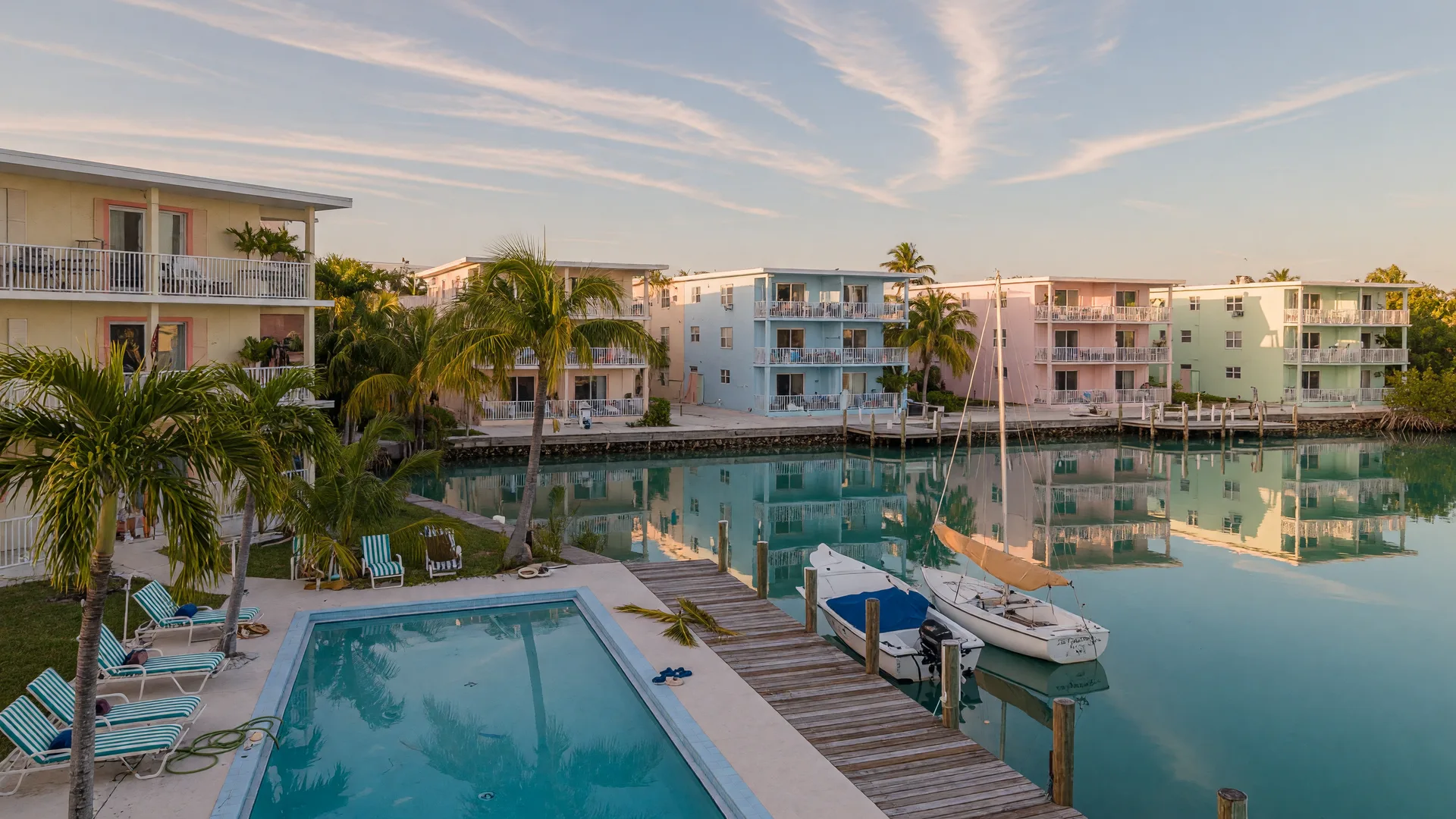
If you are newer to condo financing, my complete guide to condo financing in the Florida Keys covers project review, warrantability, and insurance from the ground up, and the 2026 rule changes guide covers the Fannie Mae and Freddie Mac updates. This article focuses specifically on the two government programs, where the approval rules are different from conventional financing and trip up more Keys buyers than any other issue.
Why FHA and VA Treat Condos Differently from Houses
With a single-family home, FHA insures the loan on the house and the VA guarantees the loan on the house. With a condo, both agencies step back and review the whole project first, because what is really being financed is your share of a building that everyone's loan depends on. If the association is underfunded, underinsured, or dominated by renters, the agencies reason, every unit owner is exposed to special assessments, litigation, and deferred maintenance.
So FHA keeps an approved condo list, the VA keeps its own approved condo list, and a project usually has to be on the appropriate list before a unit in it can be financed with that program. The requirements look similar at a glance, but there are differences that matter, especially for Keys complexes with low owner-occupancy.
How FHA Condo Approval Works in 2026
For a full FHA project approval, the complex goes through HUD's project approval process, either through the traditional HRAP route (HUD Review and Approval Process) or the streamlined DELRAP route (Direct Endorsement Lender Review and Approval Process), and lands on the FHA-approved list. Approval is valid for three years and must be recertified. Beyond that, FHA checks a set of project-level requirements:
- Owner-occupancy. At least 50 percent of the units must be owner-occupied, meaning occupied by owners as a primary or secondary residence. FHA can accept a lower ratio, down to as low as 35 percent, for projects that meet additional risk-reducing criteria. A complex where most units are vacation rentals or investor-owned has the hardest time clearing this bar, which is exactly the situation in many Keys buildings.
- Unit count and mix. The project generally must have at least five units, and commercial space is limited.
- Association finances. The budget must allocate at least 10 percent of annual income to reserves, and no more than 15 percent of units can be more than 60 days delinquent on HOA dues.
- Investor and FHA concentration. No single investor may own more than 10 percent of units in projects of 20 or more units (and only one unit in smaller projects), and no more than 50 percent of units can carry FHA-insured loans under a full project approval.
- Insurance and documents. The project must carry appropriate hazard, liability, and flood coverage, and the legal documents must be reviewed through the approval process.
Those thresholds put a lot of emphasis on the association's books and the owner-occupancy mix, which is why the FHA-approved list looks the way it does across the Keys. You can search the current list through HUD's condo lookup tools, and your lender can check it for you before you spend time on an offer.
FHA Single-Unit Approval: The Spot Approval Option
If a project is not on the FHA-approved list, all is not lost. FHA restored Single-Unit Approval, often called spot approval, in October 2019, and it has been a practical path for Keys buyers ever since. Under Single-Unit Approval, your lender submits HUD Form 9991 along with association documentation to get your unit approved in a project that is not fully FHA-approved, rather than requiring the whole building to go through full project approval.
Two limits matter. Single-Unit Approval is only available for existing, completed construction, not new construction or units in uncompleted phases. And the program caps FHA concentration: no more than 10 percent of units in projects with 10 or more units can carry FHA-insured loans, and only two FHA loans are allowed in projects of 5 to 9 units. In practical terms, if a building already has several FHA loans, a new FHA buyer may be blocked, but if the building has few or none, spot approval can work.
In 2026 the process got faster: HUD automated case-number assignment for spot approvals, covering scenarios like expired project approvals and projects that only lacked a case number, replacing part of the manual review step. The association still has to complete the documentation, so give your lender time, but the spot approval path is real and frequently used on Keys condos.
How VA Condo Approval Works in 2026
VA condo approval is project-based and slightly different from FHA's. The VA requires the project's legal documentation to be approved by the Secretary before the VA can guarantee a loan on any unit in it, and approved buildings appear on the VA's published condo list, searchable at the VA's LGY Hub condo report. A project shows up as either Accepted Without Conditions or Accepted With Conditions, and a buyer using a VA loan generally needs the building to be in an accepted status.
The key difference from FHA: there is no VA spot approval for a single unit. VA approves the whole project or it does not, so an unapproved building usually cannot support a VA loan unless someone works through the full project approval process. Your lender can submit the condominium's governing documents and HOA questionnaire to the VA to request project approval, but that takes time, often weeks added to the closing schedule, and there is no guarantee the documentation will pass.
The good news is that VA accepts projects already approved by HUD or USDA without much additional review. So if a Keys complex is on the FHA-approved list, it frequently clears the VA approval path more easily, though veterans should confirm the project's status directly before making an offer. Typical eligibility benchmarks cited for VA projects include around 50 percent owner-occupancy, no more than about 15 percent of owners delinquent on HOA dues, and adequate association insurance and reserves, with a presale requirement for new construction.
Why Owner-Occupancy Is the Hardest Hurdle in the Keys
The single biggest reason a Florida Keys condo misses the FHA or VA list is the owner-occupancy ratio. Census estimates put Key West's owner-occupied housing rate around 49 percent, with more than a quarter of the city's units vacant, and Keys officials have long estimated that roughly half of Key West residences are not primary homes. Much of the housing stock on the islands, and a large share of the condos in particular, is made up of second homes, vacation rentals, and investor-owned units.
That is exactly the kind of project mix that FHA and VA underwriting flags. A waterfront complex in Key West where half the units turn over as short-term rentals, or a Duck Key condo community marketed to seasonal owners, can easily sit below the 50 percent owner-occupancy line even though it is well run and financially healthy. The project is not a bad building; it is just a building whose use pattern does not match FHA and VA project rules.
This is why checking approval status early matters so much. The approval depends on the project's own profile, not on your credit or income, and no loan officer can make an unapproved project approved overnight. Knowing the building's status before you negotiate is the difference between a smooth close and a contract that falls apart.
What to Do When Your Condo Project Is Not Approved
If you have your heart set on a building that is not on the FHA or VA list, you still have options. Here is the order I walk Keys buyers through:
- Check the actual lists first. Approvals change as projects recertify, so search the current FHA and VA approved lists with your lender before assuming a building is ineligible. Some buildings are approved but simply not marketed that way.
- Ask about FHA Single-Unit Approval. If you are using an FHA loan and the building is existing construction with FHA concentration room, spot approval can open the door without full project approval.
- For VA, weigh the timeline. A full VA project approval through your lender can be done in some cases, but budget for weeks of association documentation and lender follow-up, and make the contingency part of your contract early.
- Consider conventional financing. Many Keys condos that miss the FHA or VA lists still finance cleanly with a conventional loan, which uses Fannie Mae and Freddie Mac project rules rather than the government lists. The 2026 conventional condo changes reshaped those rules, but conventional remains the most common path for Keys condo buyers.
- For rentals, DSCR is an alternative. If you are buying as an investment property and the income qualifies the loan, a DSCR loan uses rental income rather than your W-2, and many DSCR lenders work with projects that government programs pass on. See the DSCR guide for vacation rentals for the details.
What This Means for Different Keys Buyers
Whether condo approval becomes a problem depends a lot on who you are and how you plan to use the property.
First-Time Buyers Using FHA
FHA's 3.5 percent down payment is attractive to first-time buyers, but the program's condo rules are the most restrictive of the common options. If you are a first-time buyer looking at a condo, check the FHA-approved list and the project's owner-occupancy before you fall in love, and be ready to pivot to spot approval or conventional financing if the building is not listed. The FHA loan program page covers the full program requirements.
Veterans Using VA
VA financing is excellent when it works, but the no-spot-approval rule makes project status an even harder gate. Confirm the building is on the VA approved list before you make an offer, or confirm with your lender that a full project approval request is realistic within your timeframe. The VA loan program page has the full eligibility details.
Second-Home and Investor Buyers
By definition, FHA and VA loans are for primary residences, so buyers financing a Keys second home or investment property are looking at conventional or portfolio financing anyway. For those buyers, government approval lists matter less, and the conventional project review plus the loan terms for the property use are what drive the deal. That combination, second home or rental financing on an owner-occupied-light project, is extremely common across the Keys.
Questions to Ask Before You Make an Offer
Before you write an offer on a Keys condo, get these answers from your lender and the seller's side:
- Is the project on the FHA-approved list, the VA-approved list, or both, and when does the approval expire?
- What is the project's current owner-occupancy ratio, and how many units are second homes or short-term rentals?
- If you are using FHA, is there room for another FHA-insured loan under the concentration limits, or would Single-Unit Approval apply?
- If you are using VA, has the lender confirmed the project is in an accepted status, and if not, how long will a full project approval take?
- What percentage of the association budget goes to reserves, and what is the delinquency picture on HOA dues?
Frequently Asked Questions
Can I buy a condo with an FHA loan in the Florida Keys?
Can I use a VA loan on a condo that is not VA approved?
What is the FHA owner-occupancy requirement for condos?
How do I find out if a condo is FHA or VA approved?
Why are so many Florida Keys condos not FHA approved?
Ready to Check Whether Your Condo Will Finance?
Condo approval is the question I answer first for every Keys buyer considering a condo, because it decides which loan programs are even available for the building. Whether you are buying in Key Largo, Islamorada, Marathon, or Key West, I run the project check and lay out the FHA, VA, conventional, and DSCR options before you commit to an offer, so the financing matches the building from day one.
Get Pre-Approved or Contact Me
Written by Austin Edwards, NMLS #2639747, Ocean Blue Lending
Published October 21, 2026
Condo Financing Guide · 2026 Condo Rule Changes · Condo Financing Learning Center · Condo Loan Program · Blog