
A waterfront home in the Florida Keys sold for a median price of $1,802,000 in 2025, and in 2026 the $2 million mark has become the working entry point for many canal-front and bayfront properties in the Upper Keys. If you are shopping waterfront in Monroe County, the purchase price is only half the story. Insurance, seawalls, docks, and flood requirements can add thousands of dollars to your monthly cost, and they change which loan program makes sense for you. This guide covers what waterfront properties are actually selling for right now, what the ongoing costs look like, and how to budget for both before you make an offer.
This is the 2026 market update to my earlier complete guide to waterfront property costs in the Florida Keys. That article walks through every line item in detail. Here we focus on the current price picture, the insurance reality, and the financing math that follows.
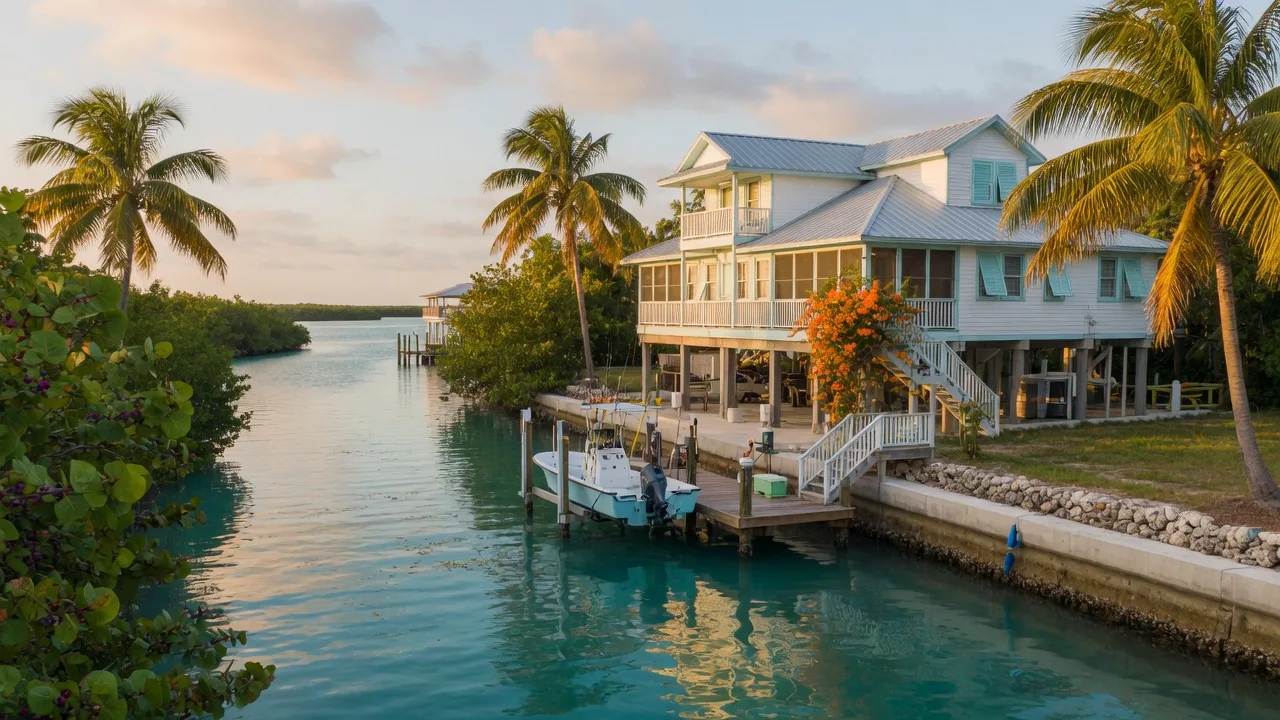
What Waterfront Homes Are Selling For in 2026
Let us start with the number that matters most. For the full year of 2025, the median sale price of a single-family waterfront home in Monroe County was $1,802,000, up about 3 percent from the year before, according to Keys market reporting. That is the median, not the top: roughly 900 waterfront homes are listed across the county at any given time, with asking prices ranging from about $768,000 to $14.5 million and beyond.
To put the waterfront number in context, Monroe County's overall median sale price sat around $965,000 in May 2026, up about 12 percent year over year. Waterfront homes run roughly double the countywide median, and the gap has held even as insurance costs have climbed. In Islamorada and Key Largo, local brokers now describe the $2 million-plus price point as the new standard for waterfront and luxury homes. That does not mean there are no affordable waterfront options, but it does mean the entry tier has moved up.
Why Waterfront Prices Stay High in the Keys
Three forces keep waterfront pricing firm even when the broader market wobbles:
- ROGO limits new supply. Monroe County's Rate of Growth Ordinance caps the number of new residential building permits issued each year. Waterfront land is finite to begin with, and ROGO means the supply of buildable waterfront lots cannot meaningfully grow. Every existing waterfront home carries a transferable ROGO allocation, which is part of why the land under these homes holds value.
- Demand is national and international. Buyers come to the Keys from across Florida, the rest of the country, and abroad, many paying cash or using substantial down payments. Second-home and vacation demand does not disappear when mainland markets cool.
- Insurance costs push some buyers out, not prices down. High premiums do shrink the pool of qualified buyers, but with supply capped and demand steady, sellers have held firm rather than cutting prices. The buyer who can qualify on a jumbo loan with the insurance built into the payment still competes for a limited number of homes.
Canal, Bay, or Oceanfront: What Your Money Buys
Waterfront pricing in the Keys is really three different markets, and the type of water access drives the price more than almost anything else:
- Canal-front homes are the most accessible tier of Keys waterfront. In Key Largo, canal-front homes typically start around $1 million, with deep-water canals that hold a boat at the dock commanding a premium over shallow canals. Canal-front is where many buyers find their first Keys waterfront home, and it is also the tier where the $2 million standard is most visible: a deep-water canal home with a new seawall, dock, and lift routinely lands in the $1.8 to $2.5 million range.
- Bayfront properties sit on Florida Bay or its protected basins. They offer open water and views at a somewhat lower premium than direct oceanfront, and they are common across Marathon and the Middle Keys. Bayfront is a strong middle ground for buyers who want water without the oceanfront price.
- Oceanfront and open-water homes are the top of the market. Direct Atlantic exposure in Islamorada, Key West, and ocean-side stretches of the Upper Keys routinely clears $3 million, with prime estates well above that. These are the properties where flood zone VE, wind exposure, and seawall condition matter most, and where insurance costs hit hardest.
The takeaway: decide which tier fits your budget before you start touring. A buyer pre-approved for a $1.5 million purchase will have very different options in canal-front Key Largo than in oceanfront Islamorada, and knowing that up front saves a lot of heartache.
Insurance Is the Cost That Changes the Math
Here is where the waterfront premium really shows up. The statewide NFIP average for flood insurance is around $938 per year, but that number is meaningless for a Keys waterfront home. Typical flood quotes for Keys waterfront properties run $2,200 to $4,800 per year, and $4,000 to $5,000 for newer elevated construction under FEMA's Risk Rating 2.0. Oceanfront properties in Zone VE run higher still.
Wind insurance is a separate policy in Florida, usually through Citizens for Keys waterfront homes. Typical single-family waterfront wind policies run $4,000 to $7,000 per year, with some homeowners reporting $12,000 or more on exposed properties. Citizens has filed for rate increases in the 16 to 21 percent range for single-family homes, with second homes facing steeper increases while primary residences are capped at 15 percent annual increases. That matters for anyone considering a second home purchase: the insurance on a non-primary residence can rise faster and higher.
Add it together and the combined wind, flood, and hazard insurance on a typical Keys waterfront home runs $18,500 to $25,000 or more per year. On a $2 million-plus property, expect $35,000 to $50,000 or more annually. That is $1,500 to $4,000 per month that has to fit in your qualifying payment before you look at principal and interest. My earlier guides on flood insurance, wind insurance, and private flood vs. NFIP cover the details, but the short version is this: get real insurance quotes during your due diligence period, never after you are under contract.
Seawalls and Docks: The Waterfront Maintenance Reality
Waterfront ownership comes with waterfront infrastructure, and it is expensive. Seawall replacement in the Florida Keys is one of the steepest line items in the state. A 2024 quote for a Keys condo association came in around $500,000 to replace a 250-foot seawall, roughly $2,000 per linear foot, driven by Keys logistics, permitting, and marine construction costs. For a typical residential lot with 50 to 80 feet of shoreline, budget accordingly, and have the seawall inspected during due diligence the same way you would a roof.
Docks and boat lifts add another layer. A residential dock with pilings, decking, and a lift can run $30,000 to $80,000 depending on depth and construction, and marine surveyors recommend inspecting pilings for rot and corrosion before you buy. Standard homeowners policies exclude seawall and dock damage, so storm damage to either is an out-of-pocket cost. None of this is a reason to avoid waterfront, but it is a reason to price it in.
How Waterfront Prices Shape Your Mortgage
Every waterfront cost we have covered feeds directly into your loan. Here is how the 2026 picture looks:
- Most waterfront purchases need a jumbo loan. Monroe County's conforming loan limit in 2026 is $990,150. With the median waterfront home at $1.8 million, nearly every financed waterfront purchase exceeds that limit. Jumbo loans typically require 20 to 30 percent down for waterfront properties, strong credit, and larger cash reserves. My jumbo requirements guide covers the specifics.
- Insurance raises your qualifying payment. Your annual premium is divided by 12 and added to your monthly housing payment. At $24,000 per year, that is $2,000 per month before principal and interest. A buyer who qualifies comfortably on a $600,000 mainland home can find their Keys buying power cut by six figures once waterfront insurance is in the payment.
- Reserve requirements are real. Lenders typically require two to twelve months of principal, interest, taxes, and insurance in cash reserves after closing, and the requirement is higher on jumbo, second home, and investment property loans. On a waterfront property with $4,000 monthly PITI, a six-month reserve is $24,000 in cash beyond your down payment and closing costs.
- Occupancy decides your program. Whether the home is your primary residence, a second home, or a rental changes your down payment, rate, and reserve requirements. If you plan to rent the property out, a DSCR loan qualified on projected rental income may fit better than a conventional loan, and waterfront rentals in the Upper Keys command a meaningful nightly premium that can support the higher costs.
Frequently Asked Questions
How much does a waterfront home cost in the Florida Keys in 2026?
Why are Florida Keys waterfront homes so expensive?
How much is insurance on a waterfront home in the Florida Keys?
Can I get a mortgage for a waterfront home in the Florida Keys?
Is a canal-front home cheaper than oceanfront in the Keys?
Know Your Waterfront Budget Before You Look
The cleanest way to shop waterfront in the Keys is to know your all-in number before you start touring: purchase price, down payment, jumbo requirements, insurance, reserves, and seawall condition all need to fit together. That is exactly what a pre-approval conversation covers. I work with waterfront buyers in Key Largo, Tavernier, Islamorada, Marathon, and Key West every week, and the waterfront numbers are part of every file from day one.
Written by Austin Edwards, NMLS #2639747, Ocean Blue Lending
Published September 30, 2026
Complete Waterfront Cost Guide · Jumbo Loan Requirements · September 2026 Market Update · Back to Blog